

International Women’s Day Activities for Children
-By Sarah
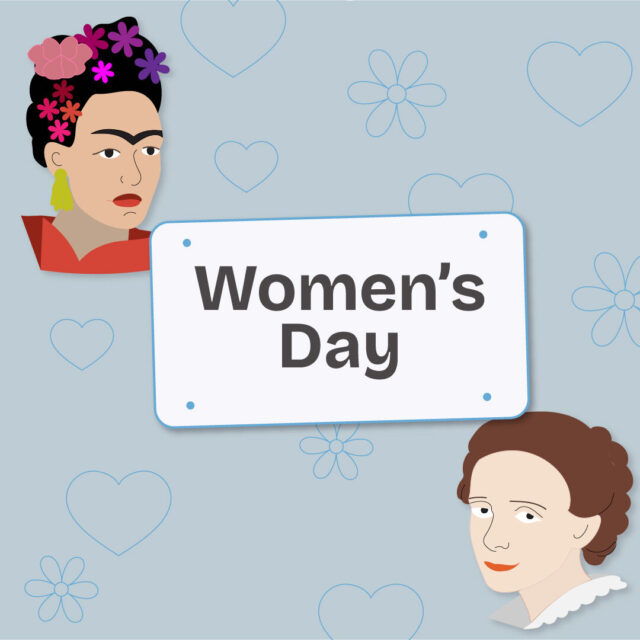
International Women’s Day is a wonderful opportunity to bring meaningful discussion, inspiring role models and real-world topics into the English classroom.
For young learners, it’s not about politics, it’s about celebrating courage, creativity, kindness and determination. It’s about showing children that people can make a difference in many different ways.
In English language lessons, this theme works especially well because it combines reading comprehension, speaking and discussion, cultural awareness, creative expression and descriptive writing.
Below are some engaging ways to explore International Women’s Day in your classroom.
Reading Activities
One of the most powerful ways to introduce International Women’s Day is through short texts about inspiring women from history and modern times.
The reading gap fill activities focus on:
Jane Goodall – environmentalist and animal researcher
Rosa Parks – civil rights activist
Malala Yousafzai – education advocate
Frida Kahlo – artist
Ada Lovelace – mathematician and early computer pioneer
Marie Curie – scientist and Nobel Prize winner
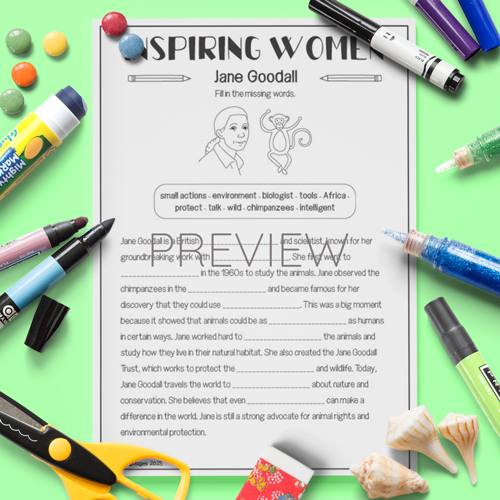
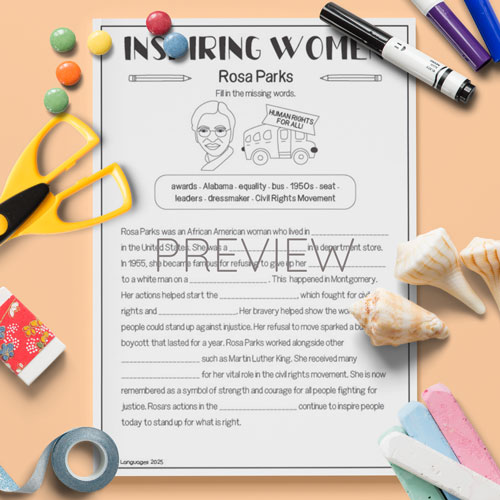
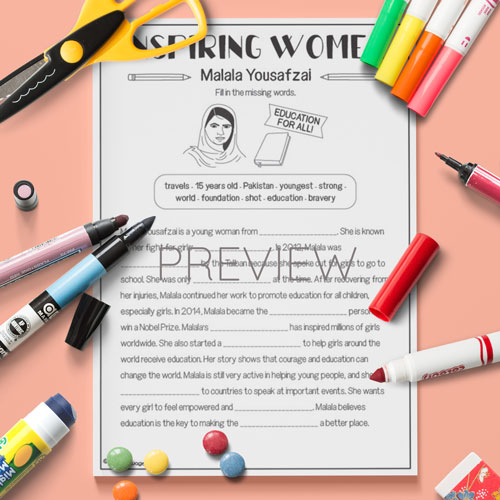
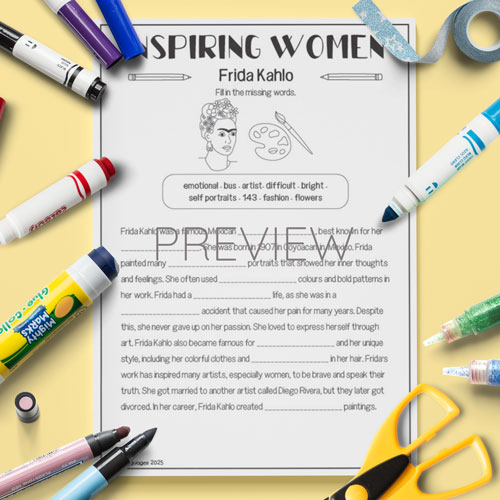
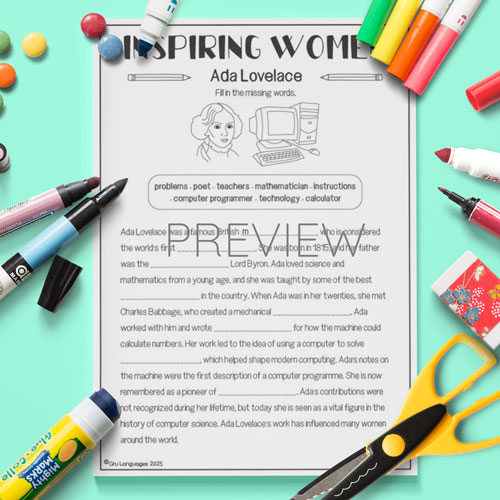
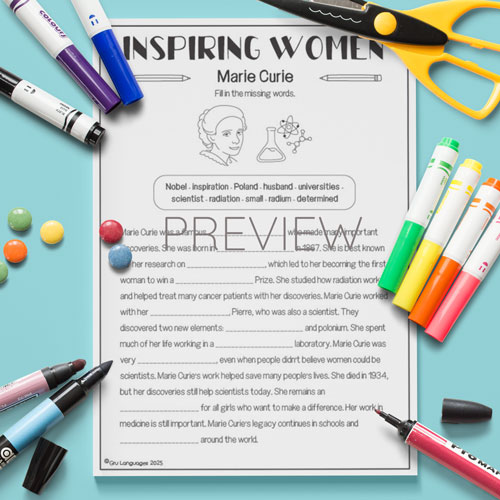
These gap fill texts allow learners to:
- Practise reading for detail
- Develop key vocabulary
- Learn about important historical figures
- Build confidence with sentence structure
- They are accessible for young learners while still introducing meaningful content.
Communication & Speaking Games
International Women’s Day is also a perfect theme for interactive speaking activities.
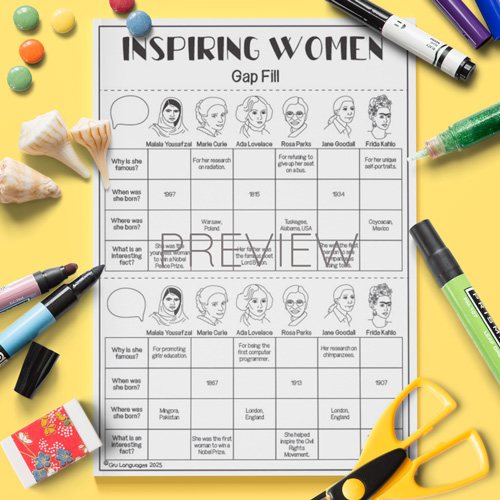
Students work in pairs to share missing information about different women. This encourages real communication and careful listening.
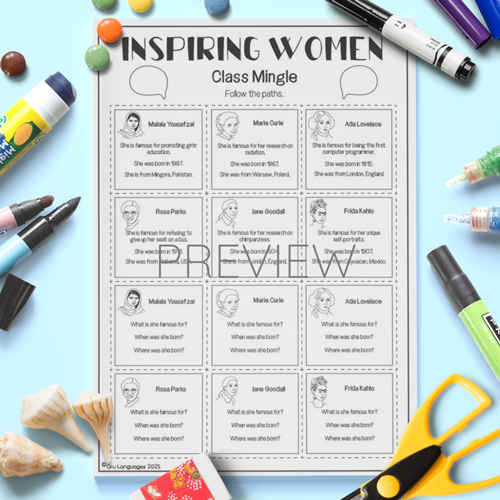
Children move around the classroom asking and answering questions about the famous women. This builds fluency and confidence in a dynamic way.
Matching Activities
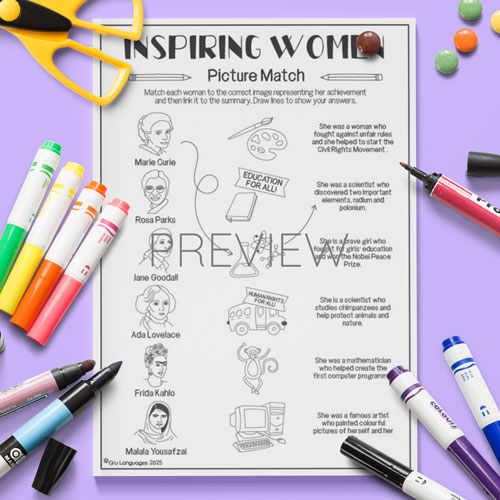
In the first activity, learners match images to descriptions, reinforcing comprehension and vocabulary.
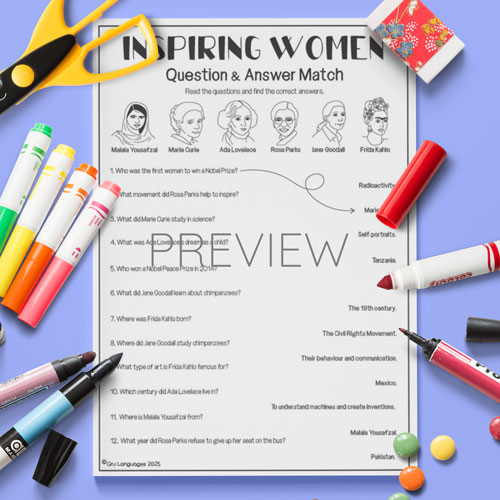
In the second, students connect questions and answers about the inspiring women, helping them practise both reading and speaking skills.
These activities make the lesson active and communicative rather than text-heavy.
Creative Activities for Reflection
International Women’s Day is also about personal connection. Creative tasks allow children to reflect on women who inspire them.
Flower Craft – Inspiring Women
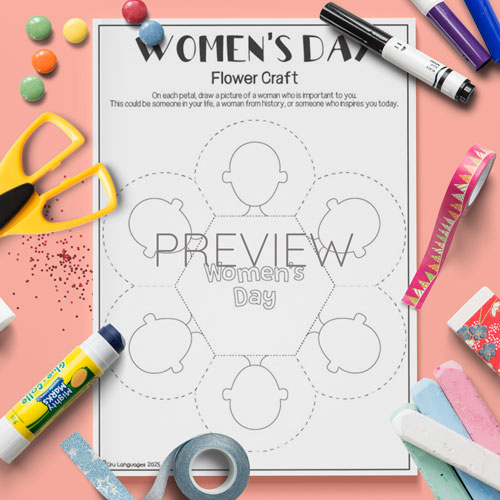
Children draw inspiring women on each petal of a flower. This could include historical figures, family members, teachers, athletes or artists.
It creates a beautiful classroom display while encouraging discussion.
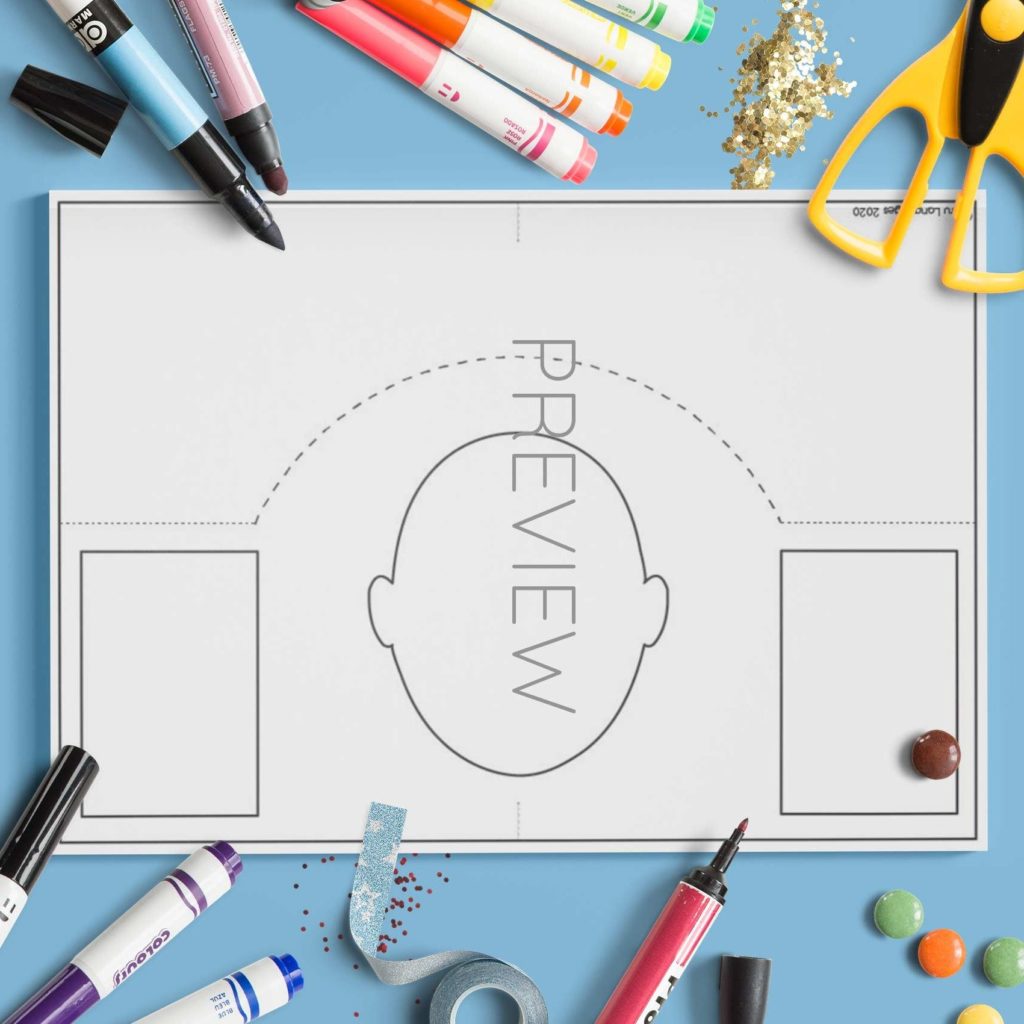
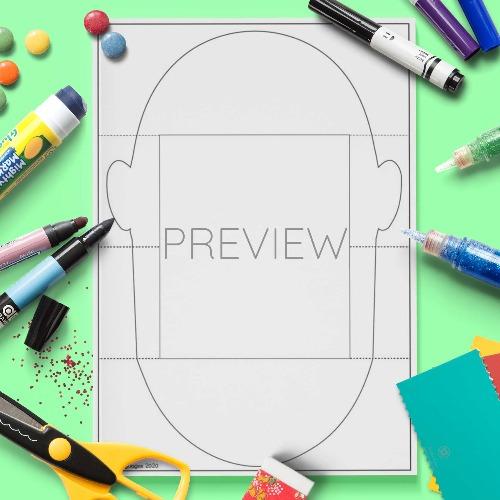
Students design and decorate a face craft representing a special woman.
Children draw and describe a woman who inspires them. The interactive pull-down design adds a fun surprise element, making it both creative and meaningful.
These crafts combine art, vocabulary and descriptive writing in a hands-on way.
Why Teach International Women’s Day in Your Lessons?
Including International Women’s Day in your lessons helps learners:
- Expand cultural knowledge
- Learn about global role models
- Develop descriptive language
- Practise past simple and present simple
- Build speaking confidence
- Reflect on values such as bravery, kindness and perseverance
It also opens space for thoughtful classroom conversations at an age-appropriate level.
Lesson Plan Ideas
You could structure a lesson like this:
- Warm-up discussion: “Who inspires you?”
- Reading gap fill about a famous woman
- Pair-work information gap activity
- Creative craft to reflect on a special woman
This approach balances reading, speaking and creativity, aligning with a communicative, play-based teaching philosophy.
If you’d like ready-to-use, printable worksheets, communication games and crafts for International Women’s Day, you can explore the full collection on Gru Languages and visit our sign up page to view our different plans.
Our goal is simple: to help children learn English in a way that feels meaningful, creative and empowering.
If you’ve used these International Women’s Day activities in your classroom, we’d love to hear how they went. Teacher feedback is always so valuable to us and many of our resources are inspired by teachers getting in touch with ideas and requests. Feel free to contact us using the contact form, we always enjoy hearing from teachers all around the world.