

Top 5 ABC Games to Make Learning the Alphabet Fun for Students
-By Sarah
Learning the alphabet is a fundamental step in language acquisition. It serves as the building blocks of language and it is essential that students become familiar with it early on.
Today we’re here to tell you that learning the alphabet doesn’t have to be tedious or boring. By incorporating engaging and interactive games, you can make this process enjoyable and effective.
Take a look at some of our favourite ABC games here.
Alphabet Board Game

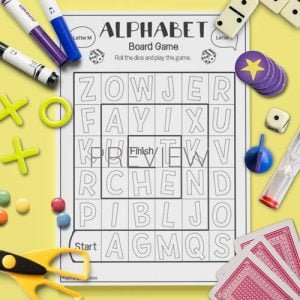

Using board games to practise and learn the alphabet offers many benefits for young learners. Here are some key advantages:
Engagement and Motivation: Board games are inherently fun and engaging, which can motivate children to participate actively in learning activities. The competitive element and the thrill of playing a game keep students interested and excited.
Reinforcement Through Repetition: Board games often require players to repeat certain actions or recognise letters multiple times, which reinforces learning through repetition. This helps in solidifying the recognition and recall of alphabet letters.
Interactive Learning: Board games provide a hands-on, interactive learning experience. Children can physically move pieces, roll the dice and interact with the game elements, which can enhance their understanding and retention of alphabet letters.
Social Skills Development: Playing board games often involves taking turns, following rules and interacting with fellow classmates. This can help children develop important social skills such as cooperation, communication and patience.
Multi-sensory Learning: Board games can incorporate various sensory inputs, such as visual (seeing the letters), auditory (hearing the sounds), and kinaesthetic (moving pieces). This multi-sensory approach can cater to different learning styles and make the learning process more effective.
Positive Reinforcement: Board games provide opportunities for positive reinforcement through rewards, points, or praise. This can boost children’s confidence and encourage them to keep practicing and learning.
Fun and Enjoyment: The primary benefit of using board games is that they make learning enjoyable. When children associate learning the alphabet with fun, they are more likely to develop a positive attitude towards learning and education in general.
By incorporating board games into alphabet learning activities, teachers can create a dynamic and effective learning environment that fosters both educational and personal growth in young learners.
Alphabet Bingo
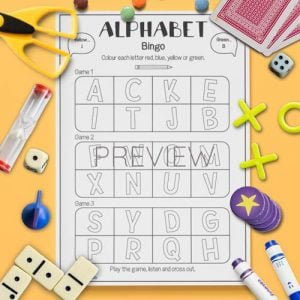
Playing bingo, an educational twist of learning and practising the alphabet offers numerous benefits for young learners. Here are some of the key advantages:
Letter Recognition: Bingo helps students become more familiar with the alphabet. By repeatedly identifying and marking letters, children reinforce their letter recognition skills.
Listening Skills: The game requires students to listen carefully to the teacher’. This enhances their auditory processing skills and improves their ability to follow directions.
Colour Recognition: Incorporating colours into the bingo game adds another layer of learning. Students practise recognising and distinguishing between different colours, which can be particularly beneficial for very young learners.
Fine Motor Skills: Colouring the grids and marking the letters involve fine motor skills. These actions help children develop hand-eye coordination and dexterity.
Concentration and Focus: Bingo requires students to stay focused and pay attention throughout the game. This can help improve their concentration and attention span over time.
Quick Thinking and Reaction: Students need to quickly find and mark the letters when called. This encourages quick thinking and rapid response, which are valuable cognitive skills.
Social Interaction: Bingo is often played in a group setting, promoting social interaction among students. They learn to take turns, celebrate others’ successes and handle both winning and losing gracefully.
Encourages Friendly Competition: The game introduces an element of friendly competition, motivating students to stay engaged and perform their best. This can also teach sportsmanship and resilience.
Reinforcement of Learning: The repetitive nature of the game reinforces the learning of letters and colours, ensuring that these concepts are well-practiced and remembered.
Fun and Enjoyment: Bingo is incredibly fun, making the learning process enjoyable. As we said above, when students have fun while learning, they are more likely to develop a positive attitude towards education and retain the information better.
By incorporating bingo into educational activities, you can create an engaging, interactive, and effective learning experience that supports a wide range of developmental skills in young learners.
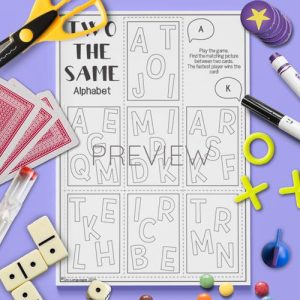
Alphabet Two The Same
Two the Same is a fun card game where players race to spot the repeated letter of the alphabet among a set of cards.
Each card features a variety of letters, and the objective is to be the first to identify and shout out the matching letter between any two cards. This game promotes quick thinking, letter recognition and visual skills, making it a fun and educational game for students learning the alphabet.
There are many benefits to playing this game with your young learner students.
Letter Recognition: This game reinforces the ability to recognise letters of the alphabet quickly. Repeated exposure to different letters helps students become more familiar with them.
Visual Discrimination: Two The Same enhances visual discrimination skills, which are crucial for distinguishing between similar letters and identifying the exact match quickly.
Attention to Detail: Players must pay close attention to the cards and the letters on them, which helps improve their focus and attention to detail.
Speed and Reflexes: The game requires quick thinking and fast reflexes as students race to identify the repeated letter. This helps to improve their reaction time and cognitive processing speed.
Concentration: To win, students need to maintain high levels of concentration and avoid distractions, which can improve their overall attention span.
Memory Skills: The game involves remembering which letters have already been seen and quickly identifying them when they reappear, which can enhance memory retention and recall.
Pattern Recognition: Identifying the repeated letters helps students develop pattern recognition skills, a fundamental aspect of cognitive development.
Social Interaction: As a multiplayer game, Two The Same encourages social interaction, cooperation, and communication among students. They learn to play together, take turns, and handle both winning and losing.
Friendly Competition: The competitive aspect of the game motivates students to stay engaged and perform their best, fostering a sense of achievement and boosting confidence.
Hand-Eye Coordination: Quickly spotting and pointing out the repeated letter requires good hand-eye coordination, which can be beneficial for overall motor skills development.
Engagement and Fun: The game is inherently fun and engaging, making learning enjoyable. When students have fun, they are more likely to stay motivated and retain the information they learn.
Confidence Building: Successfully identifying the repeated letter and winning rounds can build students’ confidence in their abilities, encouraging them to take on new learning challenges.
Multi-sensory Learning: By engaging multiple senses—sight, touch (turning over cards), and possibly sound (if they say the letter out loud) the game provides a multi-sensory learning experience, which can enhance understanding and retention.
Alphabet Battleships
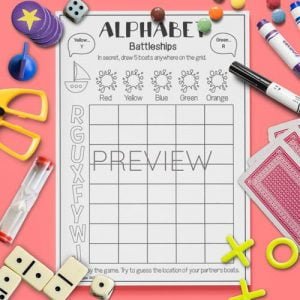
Playing ‘Battleships’ is a fantastic way to make learning the alphabet engaging and fun. This classic game, adapted for alphabet learning, offers numerous educational benefits:
Reinforces Letter Recognition: As students call out coordinates with letters and colors (e.g., B-blue, C-red), they repeatedly identify and differentiate letters, reinforcing their knowledge and recognition of the alphabet.
Enhances Memory and Recall: Keeping track of called-out coordinates and remembering where boats are hidden enhances students’ memory and recall skills, vital components of effective learning.
Promotes Strategic Thinking: Deciding where to hide boats and anticipating the opponent’s moves encourages strategic thinking and planning, which are critical cognitive skills.
Encourages Social Interaction: Playing Battleships with a partner fosters social interaction and cooperation. Students practice turn-taking, listening, and communicating effectively with their peers.
Improves Concentration and Focus: The game requires students to pay close attention to each move, improving their concentration and focus. Staying engaged and attentive throughout the game enhances their overall learning experience.
Develops Spatial Awareness: Navigating the grid and visualizing boat positions enhance students’ spatial awareness and understanding of grid coordinates, which can be useful in various academic areas.
Boosts Confidence: Successfully finding opponents’ boats and achieving objectives in the game builds students’ confidence in their abilities. Positive reinforcement through gameplay encourages a love for learning.
Incorporates Fun in Learning: By integrating play into the learning process, Battleships makes education enjoyable. Students are more likely to engage with and retain information when they are having fun.
Overall, Battleships is an effective and enjoyable tool for teaching the alphabet, combining learning with strategic play and social interaction.
Alphabet Four In A Row
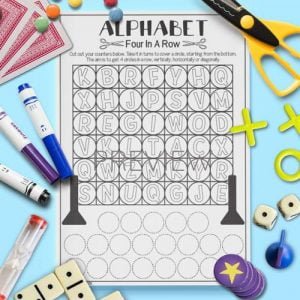
Four In A Row, similar to Connect4, is a strategic game where two players take turns placing counters on a grid. Each time a player places a counter, they say the letter in the corresponding square. The objective is to be the first to connect four of their counters in a row, vertically, horizontally, or diagonally.
Benefits for Learning the Alphabet:
Reinforces Letter Recognition: Players repeatedly identify and pronounce letters as they place their counters, reinforcing their familiarity and recognition of the alphabet.
Enhances Phonetic Skills: Saying the letter out loud with each move helps students practice their phonetic skills and improve their pronunciation.
Encourages Strategic Thinking: Players must think ahead and plan their moves to connect four counters while preventing their opponent from doing the same, promoting strategic thinking and problem-solving.
Promotes Social Interaction: The game encourages communication and social interaction between players, helping them develop teamwork and turn-taking skills.
Improves Concentration and Focus: Staying attentive to the game and focusing on each move sharpens students’ concentration and focus, crucial for effective learning.
Builds Confidence: Successfully connecting four counters and winning the game boosts students’ confidence in their abilities, providing positive reinforcement.
Integrates Fun in Learning: Combining gameplay with educational objectives makes learning enjoyable. Students are more likely to engage with and retain information when having fun.
Overall, Four In A Row is a valuable educational tool that enhances alphabet learning through an engaging and interactive approach, promoting both cognitive and social skills.
Incorporating games into the learning process can make mastering the alphabet an enjoyable and effective experience for ESL students. These activities not only reinforce letter recognition but also enhance other essential skills such as phonemic awareness, vocabulary building and strategic thinking. By integrating these games into your lessons, you can create a dynamic and interactive learning environment that motivates and engages young learners.
These games are sure to bring fun and excitement to your classroom. If you would like to gain access to these and over 2000 other printable and online teaching materials, sign up today!
Happy teaching!